
When you work with materials Particle Size Analyzer, understanding particle size distribution is essential. It shapes how your product behaves, from flowability to reactivity. Getting accurate measurements and interpreting the data correctly can make all the difference in consistency and performance. But knowing where to start and which techniques to trust isn’t always straightforward. Let’s explore how mastering this can give you a clear edge in your research and development efforts.
What Particle Size Distribution Is and Why It Matters
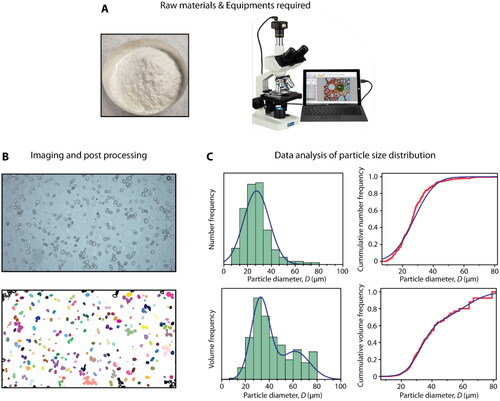
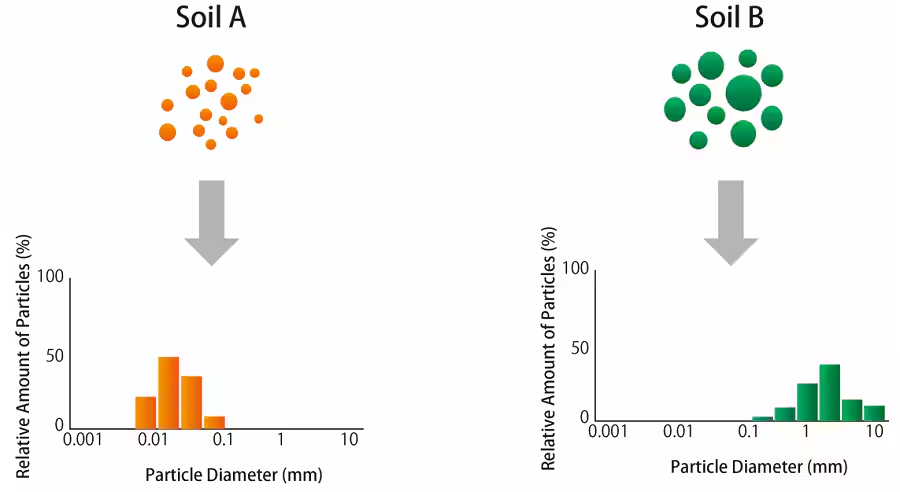
Although particle size distribution may seem technical, it directly affects how materials behave in many everyday applications. When you understand particle size distribution, you see how particles of various sizes are spread within a material. This spread influences everything from flowability to reaction rates.
Instead of focusing on a single particle size Lab Alliance, you look at the whole range, recognizing that this variety determines how materials perform. For you, grasping this concept means gaining control over processes, whether mixing powders or designing filters.
It’s about knowing how these tiny pieces come together to shape the bigger picture. By mastering particle size distribution, you access the freedom to predict and tailor material behavior, letting you innovate and optimize your projects with confidence.
How Particle Size Distribution Impacts Product Quality
When you control particle size distribution, you directly influence the quality of your product. Consistent particle sizes ensure predictable performance, whether it’s flowability, texture, or reactivity.
If your particles vary too much, you risk uneven mixing, inconsistent strength, or unpredictable behavior, which limits your freedom to innovate. By mastering particle size distribution, you can tailor products to meet exact specifications, enhancing reliability and customer satisfaction.
You also minimize waste and reduce production costs because more uniform materials behave as expected. Controlling distribution empowers you to push boundaries and create products that stand out, giving you freedom from guesswork and quality issues.
Ultimately, understanding and managing particle size distribution lets you take full control over your product’s success.
Step-by-Step Guide to Measuring Particle Size Distribution
Before you can control particle size distribution, you need to measure it accurately. Start by selecting the right sampling method to guarantee your sample truly represents the batch.
Next, prepare the sample carefully—whether dispersing dry powders or suspending particles in liquid—to avoid clumping or settling.
Choose an appropriate measurement technique, such as laser diffraction or sieve analysis, based on your material and desired resolution.
Calibrate your instrument properly to maintain accuracy, then run the measurement and collect data.
Finally, process the data to obtain a clear particle size distribution profile.
Following these steps lets you gain reliable insights and confidently adjust processes, giving you the freedom to optimize product performance without guesswork.
Key Techniques for Analyzing Particle Size Data
Since raw particle size data can be complex and varied, you’ll need effective techniques to analyze it accurately. Start by organizing your data into size classes or bins to visualize distribution patterns clearly.
Use statistical measures like mean, median, mode, and standard deviation to summarize your dataset’s key features.
Graphical tools like histograms and cumulative distribution plots help you spot trends and irregularities quickly.
Consider applying software tools or algorithms designed for particle analysis to automate calculations and improve precision.
Don’t forget to assess data quality by identifying outliers or inconsistencies.
Tips for Interpreting and Using Particle Size Data
Although particle size data can seem overwhelming at first, you can gain valuable insights by focusing on key interpretation strategies. Start by understanding the distribution’s shape—whether it’s unimodal or multimodal—to grasp your sample’s complexity.
Pay attention to median and mean sizes; they reveal central tendencies but don’t overlook extremes, as fines or oversized particles can impact performance.
Use cumulative data to see how particle volumes accumulate, helping you set meaningful thresholds.
Always consider the context—application goals and measurement methods influence how you interpret results.
Finally, combine particle size data with other material properties to make informed decisions.
Conclusion
By mastering particle size distribution, you can unlock deeper insights into your materials’ behavior and boost product quality. Accurate measurement and analysis help you predict flowability, reactivity, and performance, letting you design materials that fit your exact needs. With these skills, you’ll improve consistency, cut waste, and drive innovation in your research. Keep refining your approach, and you’ll turn complex data into powerful tools for success across industries.